-

Science Readers: Antoine Lavoisier
Antoine Lavoisier: Founder of Modern Chemistry is a biography of the pioneering chemist Lavoisier. Sidebars provide brief profiles of numerous other pioneers in science, including Marie and Pierre...
-

Science Readers: Asteroids and Comets
Asteroids and Comets is an expository nonfiction text that explains asteroids, meteorites, and comets. The back of the book includes a paragraph on one of today’s scientists. Readers gain information...
-

Science Readers: Astronomers Through Time
Astronomers Through Time is an expository nonfiction text about astronomers who have made a big impact in the field of astronomy. Astronomers include Hypatia of Alexandria, Nicholas Copernicus,...
-

Science Readers: Baby Animals
Baby Animals is a simple informational text that introduces the words used to name baby animals. The text has a repeating pattern: each two-page spread reads “2 ___” and “1 ___.” A two-page activity...
-

Science Readers: Balanced and Unbalanced Forces
Balanced and Unbalanced Forces is an informational text that explores various forces such as contact forces, distant forces, and combined forces as well as the three laws of motion. The book...
-

Science Readers: Bikes and Boards
Bikes and Boards is an expository nonfiction text that explains the science of bikes and boards, motion and force, testing the limits with tricks, snowboarding, aerodynamics, and the future of bikes...
-
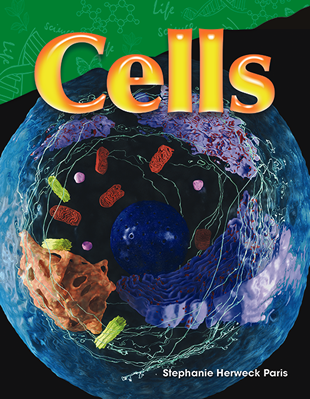
Science Readers: Cells
Cells is an expository text that takes readers inside a cell and explains unicellular and multicellular organisms, cell theory, passive and active transport, and little cells that are big deal...
-

Science Readers: Changing Matter
Changing Matter is an informational text that explores the four states of matter (solid, liquid, gas, and plasma) and the ways in which the states change. The book concludes with an experiment...
-

Science Readers: Changing Weather
See how the weather can change the look of an everyday street in this fun science reader. With clear text and engaging images, readers will see how the sun, clouds, rain, and other types of weather...
-

Science Readers: Chemical Reactions
Chemical Reactions is an expository text that explores the concept of chemical reaction including what happens when you combine substances, how to examine properties, creating products, and different...
-

Science Readers: Circuits
Circuits is an expository text that explores the concepts of electricity, simple circuits, digital circuits, series circuits, parallel circuits, complex circuits, how to control circuits, and...
-

Science Readers: Climate
Don't get caught wearing flip flops in the snow! Knowing about the climate of different places will prepare you for any kind of weather. Take a trip from the equator to the polar regions of Earth and...