-

Smithsonian Readers 4: The Science of Waves and Surfboards
Being a great surfer requires more than skill and instinct. It's a sport that relies on science! Without buoyancy, surfers would sink. Without acceleration, they could not travel the length of a wave...
-
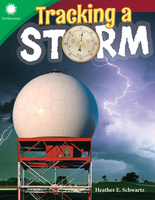
Smithsonian Readers 4: Tracking a Storm
Modern meteorologists put science to work to predict what the future holds. These predictions tell people how to dress for the day, or whether to pack an umbrella. But that's not all they do! They...
-

Smithsonian Readers 5: Color-Changing Cephalopods
Imagine changing the color of your skin or even your shape in an instant. If you were a cephalopod, you wouldn't have to imagine it--you could to it! Scientists are closely studying them to learn how...
-

Smithsonian Readers 5: Designing National Parks
Visitors from across the country and around the world flock to U.S. national parks to explore their beauty. Little do they know that the National Park Service (NPS) has been guiding and enhancing...
-
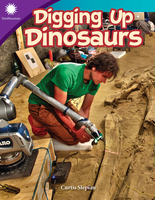
Smithsonian Readers 5: Digging Up Dinosaurs
Many people go to museums to see dinosaur fossils. But visitors would never get to see these displays without the work of paleontologists. They locate fossils, dig them up, and send them to a lab to...
-
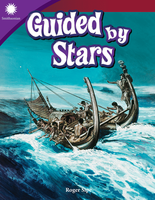
Smithsonian Readers 5: Guided by Stars
Ancient Polynesians were some of the best navigators in history. They sailed double-hulled outrigger canoes across great distances and settled in all the major islands in the Pacific Ocean hundreds...
-

Smithsonian Readers 5: Inka Terraces
The Inka were master farmers, builders, and planners who lived in the Andes Mountains. This challenging environment required the Inka to develop innovative engineering solutions in order to farm,...
-

Smithsonian Readers 5: Life in a Cube
How much life can fit in one cubic foot? Photographer David Liittschwager and zoologist Chris Meyer learned the answer is: quite a lot! Learn how studying life in just one cubic foot can teach us...
-
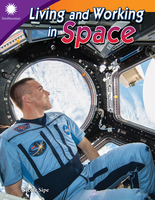
Smithsonian Readers 5: Living and Working in Space
What is it like to eat, sleep, and work in space? Find out as you read about life in a space station orbiting above Earth! Discover how astronauts function in a challenging environment that includes...
-

Smithsonian Readers 5: Making Music with Magnets
Magnets are the sparks that bring electric guitars to life! Learn how the guitar has changed over time and how it has impacted music. You'll also learn how electromagnets work and what they're made...
-

Smithsonian Readers 5: Plant Invaders
Little green aliens have invaded the planet! No, not space invaders from Mars. These are plant invaders. Sure, they look harmless. But invasive species can wreak havoc on ecosystems. Learn how people...
-

Smithsonian Readers 5: Saving a Species
People at Smithsonian's National Zoo and Conservation Biology Institute are working hard to save animal species from extinction. Meet five animals they have saved and learn about the people on a...