-

Smithsonian Readers 4: Conserving an Aircraft
The Horten Ho 229 was an experimental German airplane created by the Nazis. They believed its innovative design would help them win the war. Although this experimental aircraft never worked as...
-

Smithsonian Readers 4: Designing a Shuttle
How do you build a reusable spacecraft that is strong enough to hold up in outer space, but is light enough to fly? How do you design it to meet the needs of the astronauts it carries? In the 1970s,...
-

Smithsonian Readers 4: Designing Butterfly Exhibits
Many butterfly species are in decline. Fortunately, people can see butterflies up close at butterfly exhibits. What steps are required to plan and create a butterfly exhibit? Learn about the...
-
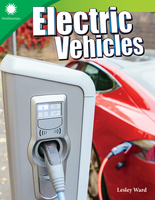
Smithsonian Readers 4: Electric Vehicles
Electric vehicles, or EVs, have been around for over 100 years. The first EV that people could buy went on sale in 1894. The Electrobat" could go 25 miles on one battery charge. Today's EVs are...
-

Smithsonian Readers 4: Exploring Volcanic Activity
Volcanoes can burn hotter than anything on the Earth's surface. But there is no doubt that nothing is cooler than a volcano! Volcanologists are scientists who study volcanoes. Learn about this...
-

Smithsonian Readers 4: Organic Farming
Long ago, farmers used natural farming methods. Then, faster ways to grow food were invented. Some of these methods were not natural. Organic farming has changed that. Farmers are working again with...
-

Smithsonian Readers 4: Powered by Steam
Did you know that steam can be used to power engines? In fact, steam power drastically changed the manufacturing and transportation industries. Learn about the history of steam power and the...
-

Smithsonian Readers 4: Rebuilding the Body
The first prosthetic devices consisted of wooden legs and hooks for hands. Today, many prostheses and bionics can do everything a natural limb can do--and more! Learn about inventions from the past...
-

Smithsonian Readers 4: Saving the Arctic
The Arctic ecosystem is changing. The temperature is getting warmer, and the polar ice is melting. Polar scientists from around the world study the Arctic because changes there affect the entire...
-

Smithsonian Readers 4: Selling More Snacks
How can you make ice cream creamier? What packaging keeps cookies fresh the longest? And how do you make potato chips that taste like a cheeseburger? These are some of the problems that a food...
-

Smithsonian Readers 4: The Culture of Calendars
Time has fascinated humans for thousands of years. We have struggled to find ways to keep track of time and predict patterns in nature. Ancient people watched the skies to study nature's cycles and...
-
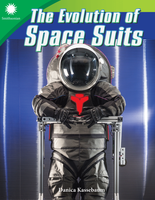
Smithsonian Readers 4: The Evolution of Space Suits
If you were traveling to outer space, what would you wear? Luckily, some of the best scientists have figured that out for astronauts. NASA scientists and engineers have designed the best gear to help...