-
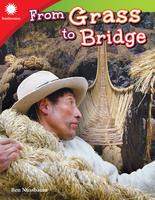
Smithsonian Readers 3: From Grass to Bridge
Hundreds of years ago, the Inka Empire was the largest on Earth. The Inka were great builders, and created roads that helped the empire run smoothly. The most impressive part of the Inka roads were...
-

Smithsonian Readers 3: Helping People See
Learn about the world of optics, where light bends to help us see the sights! Most of us rely on our eyes to see and understand the world. Yet, human eyes are far from perfect. Innovations such as...
-

Smithsonian Readers 3: Making a Mummy
Scientists have studied mummies for a long time. They study the science behind them. But scientists also study more than just what happens. They study the culture of mummies. The culture is why...
-
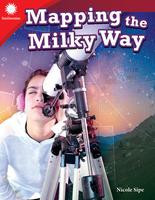
Smithsonian Readers 3: Mapping the Milky Way
The stars in the sky are part of our galaxy, the Milky Way. Scientists have tried to map the Milky Way for centuries, but it is hard! The Milky Way is so large, scientists cannot simply take a...
-

Smithsonian Readers 3: Navigating at Sea
How did sailors long ago know how to get from here to there? They needed smarts, bravery, and tools of navigation! Many of the tools used then are still used in some form today. Modern technology...
-

Smithsonian Readers 3: Predicting Earthquakes
Seismologists have an important job. These scientists study earthquakes. Why is it so important to study earthquakes? By studying quakes, seismologists can help protect people from injury and death...
-
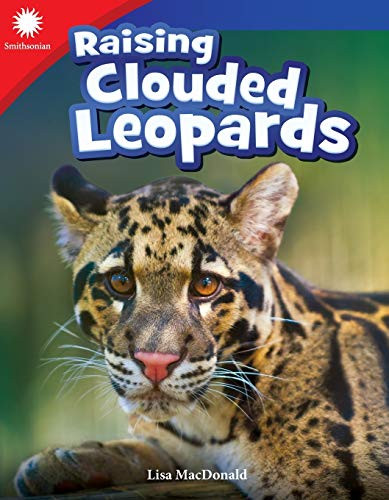
Smithsonian Readers 3: Raising Clouded Leopards
The clouded leopard is a shy and reclusive cat. This relative of lions and tigers is an endangered species. Their shy nature makes studying them difficult for zookeepers and scientists. Discover what...
-

Smithsonian Readers 3: Restoring Muddy Creek
Streams are an important part of our world. They are the source of drinking water for countless plants and animals. But many streams are eroding. In Maryland, there is a huge effort to restore Muddy...
-

Smithsonian Readers 3: Saving Culture from Disaster
History is everywhere you look. But what happens when there is a disaster, such as a flood or an earthquake? People called conservators visit places hit by disasters. They work to save the items that...
-

Smithsonian Readers 3: Taking Photos from Space
Landsat satellites are the superheroes of space. They orbit Earth to get images. These images can help stop catastrophes, and solve great mysteries. From poisoned water to raging fires, Landsat sees...
-
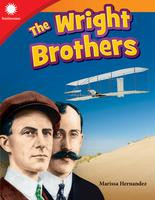
Smithsonian Readers 3: The Wright Brothers
Have you ever wondered how something flies? Wilbur and Orville Wright had the same question more than 100 years ago. Today, the Wright brothers are known as the forefathers of flight. Learn about the...
-

Smithsonian Readers 3: Underwater Training
Did you know astronauts train in water before going to space? They're not the only ones who use swimming pools for training. Athletes train in water when they are hurt. Doctors use water treatments...