-

Smithsonian Readers 3: Restoring Muddy Creek
Streams are an important part of our world. They are the source of drinking water for countless plants and animals. But many streams are eroding. In Maryland, there is a huge effort to restore Muddy...
-

Smithsonian Readers 3: Saving Culture from Disaster
History is everywhere you look. But what happens when there is a disaster, such as a flood or an earthquake? People called conservators visit places hit by disasters. They work to save the items that...
-

Smithsonian Readers 3: Taking Photos from Space
Landsat satellites are the superheroes of space. They orbit Earth to get images. These images can help stop catastrophes, and solve great mysteries. From poisoned water to raging fires, Landsat sees...
-
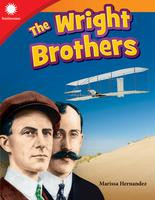
Smithsonian Readers 3: The Wright Brothers
Have you ever wondered how something flies? Wilbur and Orville Wright had the same question more than 100 years ago. Today, the Wright brothers are known as the forefathers of flight. Learn about the...
-

Smithsonian Readers 3: Underwater Training
Did you know astronauts train in water before going to space? They're not the only ones who use swimming pools for training. Athletes train in water when they are hurt. Doctors use water treatments...
-
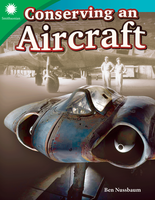
Smithsonian Readers 4: Conserving an Aircraft
The Horten Ho 229 was an experimental German airplane created by the Nazis. They believed its innovative design would help them win the war. Although this experimental aircraft never worked as...
-

Smithsonian Readers 4: Designing a Shuttle
How do you build a reusable spacecraft that is strong enough to hold up in outer space, but is light enough to fly? How do you design it to meet the needs of the astronauts it carries? In the 1970s,...
-

Smithsonian Readers 4: Designing Butterfly Exhibits
Many butterfly species are in decline. Fortunately, people can see butterflies up close at butterfly exhibits. What steps are required to plan and create a butterfly exhibit? Learn about the...
-
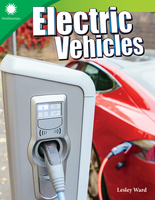
Smithsonian Readers 4: Electric Vehicles
Electric vehicles, or EVs, have been around for over 100 years. The first EV that people could buy went on sale in 1894. The Electrobat" could go 25 miles on one battery charge. Today's EVs are...
-

Smithsonian Readers 4: Exploring Volcanic Activity
Volcanoes can burn hotter than anything on the Earth's surface. But there is no doubt that nothing is cooler than a volcano! Volcanologists are scientists who study volcanoes. Learn about this...
-

Smithsonian Readers 4: Organic Farming
Long ago, farmers used natural farming methods. Then, faster ways to grow food were invented. Some of these methods were not natural. Organic farming has changed that. Farmers are working again with...
-

Smithsonian Readers 4: Powered by Steam
Did you know that steam can be used to power engines? In fact, steam power drastically changed the manufacturing and transportation industries. Learn about the history of steam power and the...